Choosing Professional Makeup Brushes is less about owning a large set and more about selecting tools that suit your routine. The right brush should feel comfortable, pick up product evenly, and offer enough control for the finish you want. A soft, dense brush can blend foundation across the cheeks, while a tapered shape helps place color beside the nose or beneath the eyes. Small details matter. Handle balance, ferrule security, and bristle softness can affect how a brush performs during everyday use. Feel the handle.
This guide explores brush shapes, bristle materials, construction, and care, so you can compare options with practical criteria. It also considers how your preferred products and techniques influence your choices. Cream formulas, for example, may call for different bristle density than loose powder. Synthetic and natural bristles can each have useful qualities, but performance varies by brush design and manufacturer. Read product details carefully, and check whether the brush is easy to clean and maintain. Price alone is not proof of quality. A costly brush may not suit your hand, and a less expensive one may work well for a specific task. There is no perfect checklist for every face or routine. Even experienced makeup users can choose a brush that feels awkward after a few applications. The aim is to make an informed choice, test what feels right when possible, and build a set that earns its place on your vanity.
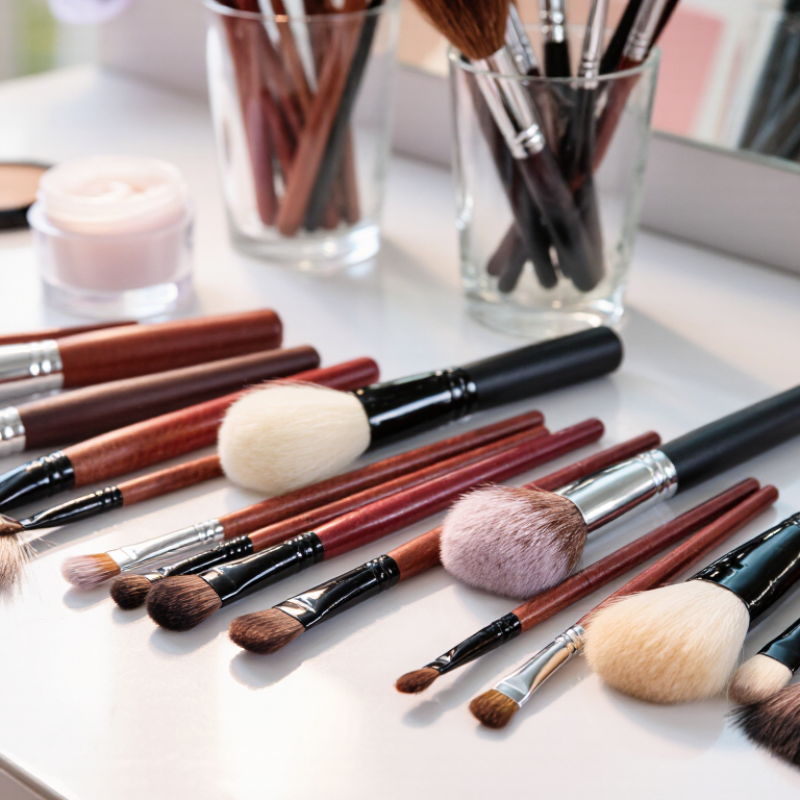
A useful brush set starts with the makeup tasks you do most often, not the number of brushes in a kit. Ask what each brush must pick up, place, or soften. For liquid foundation, a dense, rounded brush can spread product across the cheeks and around the nose. A flatter edge helps reach beside nostrils, but may leave streaks if you press too hard. Use a damp sponge or lighter pressure to soften visible lines.
For cream concealer, choose a smaller, flexible brush that can work under the eyes without dragging delicate skin.
Powder needs a different touch: a loose, rounded brush places a sheer layer, while a smaller tapered shape targets shine beside the nose. Don't confuse softness with control. A very fluffy brush can scatter powder where you do not want it. Test the pressure.
Eye tasks call for more precision. A small, flat brush presses color onto the lid; a clean, soft blending brush diffuses the edge through the crease. Keep it simple.
For brows or eyeliner, a short angled brush offers control along narrow lines. Check that the handle feels balanced and the bristles return to shape after washing. There is no perfect layout for everyone, and a brush that works well with powder may feel awkward with cream. Regular cleaning also matters: residue can stiffen bristles and muddy colors.
Synthetic and natural bristles behave differently because formulas need different kinds of pickup and release. Smooth synthetic filaments usually work well with liquid foundation, concealer, and cream blush. They absorb less product, so a damp, dense brush can leave fewer streaks around the nose. Natural bristles often grip loose powder and blend it softly across the cheeks. They can be less predictable with wet formulas. There are exceptions.
Textile Exchange’s 2023 Materials Market Report estimates that polyester made up 54% of global fiber production in 2022. That figure covers the wider fiber industry, not makeup brushes, but it shows how established synthetic materials are. Brush performance still depends on filament shape, density, and finishing—not just the label. A soft synthetic brush may suit powder; a poorly shaped one can leave patches.
Check the brush with your actual formula. Swipe cream foundation along your jaw, then look for drag or visible streaks. For powder, tap the brush once and watch how evenly it releases pigment. Natural hair can feel lovely, but it may need gentler washing and longer drying. Synthetic brushes are generally easier to clean. My own shortcut—choosing by bristle type alone—has failed more than once. The handle and ferrule matter, too.
A brush works best when its shape fits the area you are applying product to. For foundation, a dense, rounded or flat-top brush can press liquid or cream into the skin. Short bristles offer control around the nose and jaw. If you see streaks, try less product and lighter pressure before switching brushes. Small changes matter.
For powder blush or bronzer, choose a softer brush with more space between its bristles. A tapered or angled head follows the cheekbone and helps spread color without leaving a hard stripe. For eyeshadow, a small, firm brush places pigment on the lid, while a fluffy blending brush softens edges in the crease. Keep each tool’s job in mind. I sometimes use a blending brush that is too large, and color drifts farther than I intended.
Size matters as much as shape. A broad brush covers the forehead quickly, but it can be clumsy beneath the eyes. Use a smaller, less dense brush for concealer or precise powder placement. Match the brush to the product, too: loose powders often suit fluffy bristles, while creams usually need firmer support. There is no perfect set for every face. Check how the brush feels in your hand, and notice where product gathers after a few strokes.
A brush can look polished and still wear out quickly. Inspect the ferrule, the metal sleeve joining the bristles to the handle. It should sit firmly, with no wobble or visible gap. Gently move the bristle head from side to side; any clicking or looseness may signal a weak connection. Check the metal for rough edges, dents, or signs of poor finishing. Small details matter.
The handle should feel balanced in your hand, not unusually heavy or slippery. Look closely for cracks, uneven seams, or peeling paint near the ferrule, where moisture often collects during cleaning. A smooth finish is useful, but it should not hide a loose joint. I used to judge brushes by appearance alone. That was not enough. Comfort and construction both affect how well a brush holds up through regular use.
Bristles should feel soft against the skin, with no sharp, scratchy ends. Check whether they form an even shape and spring back after a light press. A few loose fibers can happen, but repeated shedding may point to a poorly secured bundle. Synthetic and natural fibers can both be durable; the quality of the cut, setting, and care matters. Ask how the brush should be cleaned, since unsuitable products or rough handling can shorten its life.
How to Choose the Best Professional Makeup Brushes?
Choose brushes that feel balanced in your hand and suit the products you use. Smooth, securely attached bristles are easier to clean than loose, shedding fibers. The American Academy of Dermatology (AAD) recommends washing makeup brushes every 7–10 days. That schedule is easy to overlook. Set a weekly reminder, especially if you use brushes daily. Wet the bristles with lukewarm water, work in a little gentle cleanser, then rinse without soaking the handle. Reshape the brush and dry it flat, with the bristles extending beyond the counter’s edge. A brush that stays damp can be uncomfortable to use, so allow it to dry fully before storing.
Cleaning matters beyond appearance. A 2019 peer-reviewed study in the Journal of Applied Microbiology examined 467 used makeup products. It reported bacterial contamination in 70–90% of products, depending on type. About 93% of the beauty blenders in the sample had never been cleaned. The study did not test brush-cleaning intervals, so it cannot establish a specific risk for brushes. Still, it is a useful reminder to keep reusable tools clean. Wash brushes more often if they are visibly dirty or shared, and replace any with damaged bristles. A clean brush is not a guarantee against irritation, but it is a sensible part of a careful routine.
Start with the tasks you do most often. A few useful brushes can be better than a large set.
Try a dense, rounded brush to spread foundation over cheeks. Use its edge gently beside the nose; firm pressure may leave streaks.
Choose a small, flexible brush. Use light strokes on the delicate skin.
A loose, rounded brush applies a sheer layer. A smaller tapered brush can target shine beside the nose. Test the pressure.
A small, firm brush presses color onto the lid. A clean, soft brush blends the crease. Keep the jobs separate.
Use a soft, angled or tapered brush along the cheekbone. Apply a little at a time; color can spread farther than planned.
Yes. A broad brush covers the forehead quickly, but feels clumsy under the eyes. Smaller brushes offer more control.
Check its balance in your hand and see whether the bristles regain their shape after washing. I sometimes choose one that is too large, so this check is easy to forget.
Choosing the right Professional Makeup Brushes starts with identifying the tasks they need to perform, such as applying foundation, blending eyeshadow, or adding precise detail. Consider the formulas you use: synthetic bristles are often suited to creams and liquids, while natural bristles can work well with powders. Brush shape, size, and density also matter. A broad, dense brush can provide even coverage, while a smaller, softer brush offers more control for blending and detailed work.
For lasting performance, inspect the bristles for secure construction and a comfortable feel, and check that the ferrule is firmly attached to the handle. Well-made materials can help brushes keep their shape with regular use and care. Clean makeup brushes every 7–10 days, following American Academy of Dermatology guidance, to remove product buildup and keep them ready for your next application.