0%

Choosing among the Top 10 Makeup Brush Manufacturers for Global Buyers takes more than comparing glossy catalogs. A brush may look polished in a product photo, yet feel unbalanced in the hand or shed after repeated washing. Buyers need to examine bristle material, ferrule attachment, handle finish, and consistency across production runs. Small details matter. A loose ferrule can turn a promising sample into a costly problem.

Makeup artist Bobbi Brown has said, “I believe all women are pretty without makeup—and can be pretty powerful with the right makeup.” Her words focus on makeup, but the tools behind its application deserve careful attention too. This guide introduces manufacturers for different needs, from private-label collections to established product lines. It considers sample quality, customization options, minimum order quantities, communication, and production reliability. Ask for clear specifications and test samples under real working conditions. A soft brush in a showroom may behave differently after weeks of use. Still, no list can replace hands-on evaluation. Some details are easy to overlook, and a ranking may not fit every buyer. Treat these manufacturers as a starting point, then verify claims directly before placing an order.
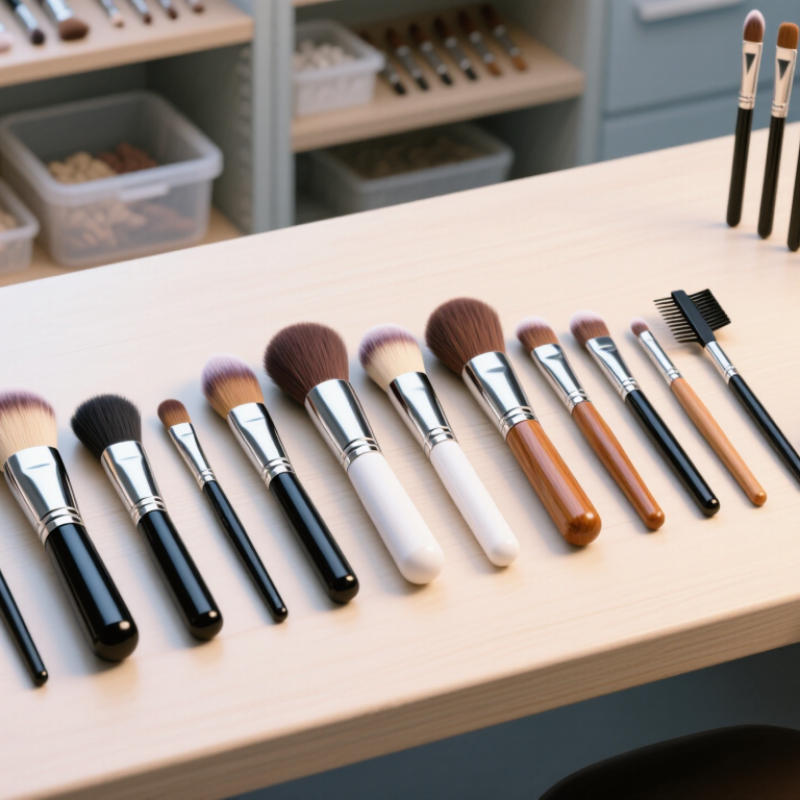
Top 10 Makeup Brush Manufacturers for Global Buyers

What Makeup Brush Manufacturers Produce and How the Industry Works

Top 10 Makeup Brush Manufacturers for Global Buyers

Makeup brush manufacturers turn design drawings into tools used by makeup artists and everyday consumers. Production commonly includes selecting bristles, cutting and shaping them, fitting them into metal ferrules, attaching handles, and checking the finished brushes. Some factories also make brush sets, pouches, and display packaging. Small details matter: loose ferrules, uneven tips, or rough handle edges can affect how a brush feels and performs.

Demand sits within a much larger beauty market. Cosmetics Europe’s 2024 market report estimates European cosmetics and personal-care retail sales at about €96 billion in 2023. That figure does not measure brush sales specifically, but it helps show the scale of the market these suppliers serve. For buyers, evaluate a manufacturer’s material specifications, sample consistency, production capacity, and quality checks. A polished sample is useful, but it cannot prove every batch will match. Ask how defects are recorded and corrected.

Tips: Test samples with the intended powders or creams, then wash and dry them several times. Check shedding, shape retention, and handle finish. Small trial orders can reveal problems early. Even then, results may vary between production runs.

How to Evaluate Manufacturers for Quality, Compliance, and Capacity

A dependable brush supplier should show how quality is controlled, not just send polished samples. Ask for written checks on bristle shedding, ferrule pull strength, handle finish, and odor. Request recent batch records and compare retained samples with production units. A soft sample means little if bulk brushes shed after repeated cleaning.

Compliance needs evidence tied to the factory and the destination market. The ISO Survey 2022 recorded 1,265,216 valid ISO 9001 certificates worldwide. That scale makes certification useful, but not decisive: ISO 9001 covers a quality-management system, not the performance of each brush. Check the certificate’s site, scope, and expiry date. Ask for material declarations, test reports, and traceable lot codes. Paperwork can look convincing.

Capacity is best tested against actual production details. Ask for monthly output by brush type, current order load, lead times, and backup plans for delayed handles or fibers. Review a recent production schedule, then verify whether the quoted volume fits available lines and inspection staff. A factory visit or independent audit can reveal crowded packing tables, inconsistent labeling, or unfinished goods. One caution: capacity figures are often estimates, and I would not accept them without evidence.

Key Manufacturing Regions and Their Specialties

Makeup brush manufacturing is concentrated in regions with different strengths. China, especially coastal production hubs, is known for large-volume orders, varied handle materials, and broad synthetic-fiber options. Suppliers there may support custom shapes and packaging, but quality can vary between factories. Ask for samples from the actual production line. Small differences matter.

Japan’s Kumano area is associated with hand-assembled brushes and careful shaping. Skilled workers often form and trim bristles individually, which can suit premium lines requiring soft, controlled application. Production may be slower, and prices can reflect the labor involved. Korean manufacturers are often valued for responsive product development and coordinated brush sets. Their proximity to fast-moving beauty markets can help buyers test new shapes, though timelines still need confirmation.

European suppliers, including those in Germany and Italy, may focus on precise finishing, durable handles, and smaller specialist runs. The regional label alone is not proof of consistent performance. Buyers should compare fiber shedding, ferrule fit, handle balance, and wash-test results across samples. A brush that feels soft when dry may behave differently after repeated cleaning. Factory audits and clear specifications help, but neither removes every production risk. Even experienced buyers sometimes overlook that detail.

Profiles of 10 Makeup Brush Manufacturers for Global Buyers

A useful shortlist should compare manufacturing strengths, not just glossy catalogs. Grand View Research estimated the global makeup tools market at USD 2.6 billion in 2023, projecting 6.4% annual growth through 2030. Demand is broad, but factory capabilities vary. The natural-bristle specialist suits traditional powder brushes; the synthetic-fiber producer offers consistent shapes for liquid products. The private-label OEM supports custom handles and packaging. The high-volume supplier prioritizes repeatable output. Small details matter.

The eye-brush specialist focuses on tapered tips and controlled pickup. The complexion-tool maker develops dense, rounded heads for foundation blending. The materials-focused producer uses recycled or lower-impact components, but buyers should request documentation rather than trust vague claims. The travel-set manufacturer designs compact ferrules and protective sleeves. A sample test can reveal loose hairs, uneven glue, or handles that feel unbalanced. Not always.

The artisan workshop offers small-batch finishing and closer design collaboration. The integrated supplier combines brush production with packaging coordination, potentially simplifying procurement. These ten profiles represent different sourcing needs, not a universal ranking. Ask each supplier for material specifications, minimum order quantities, inspection records, and lead-time ranges. Test brushes after washing and repeated use; a soft first touch can hide shedding. Grand View Research’s market estimate provides context, not proof of any manufacturer’s quality. Buyers should verify samples and production controls independently.

How to Compare Suppliers and Plan International Sourcing

When comparing makeup brush suppliers, look beyond catalog photos and quoted prices. Ask for the brush’s fiber type, ferrule material, handle coating, and assembly method. Request samples from the production line, not only showroom pieces. A brush should feel balanced in the hand, shed minimally after repeated washing, and keep its shape when dry. Small details matter. Record test results for each sample so feedback is specific rather than “this one feels better.”

For international sourcing, compare the full landed cost, including packaging, freight, insurance, duties, and possible inspection fees. Confirm minimum order quantities, production capacity, sample lead times, and how delays are reported. Ask suppliers to document quality checks, such as ferrule pull tests and shedding inspections. Samples can mislead. One batch may perform well while later runs vary, so agree on measurable acceptance criteria before placing a larger order.

Communication is part of supplier quality. Send a clear specification sheet with brush dimensions, fiber length, color references, logo placement, and packaging requirements. Request dated production updates and photos of packed cartons. Also check whether the supplier can provide consistent export documents and suitable protective packaging for your shipping route. A low quote can still be useful, but only when its assumptions are clear. I would revisit the comparison if freight estimates or material costs change; those figures are easy to overlook, and they can reshape the buying decision.

FAQS

What strengths do different manufacturing regions offer?

Coastal Chinese suppliers often support large orders, varied handle materials, and synthetic fibers. Japan’s Kumano area is known for hand-shaped bristles. Korean suppliers may develop coordinated brush sets quickly. European makers often focus on precise finishes and smaller specialist runs.

How can buyers check a brush sample?

Hold it to assess balance, then wash it repeatedly. Check for shedding, shape retention, and a secure ferrule. Samples can mislead.

What details should buyers request from suppliers?

Ask for fiber type, ferrule material, handle coating, and assembly method. Request samples from the production line, not just showroom pieces. Small details matter.

How should suppliers’ quality be compared?

Record results for each sample, including shedding after washing and handle balance. Compare the same tests across suppliers. A dry brush may feel soft but change after cleaning.

What costs belong in an international sourcing estimate?

Include packaging, freight, insurance, duties, and possible inspection fees. A low quote can hide assumptions. I would recheck freight estimates before deciding.

What should a brush specification sheet include?

List brush dimensions, fiber length, color references, logo placement, and packaging requirements. Clear measurements make feedback easier to act on.

How can buyers reduce uncertainty about later production batches?

Ask about quality checks, such as ferrule pull tests and shedding inspections. Agree on measurable acceptance criteria before ordering in volume. One good sample does not guarantee every batch will match.

What should buyers confirm about production and shipping?

Confirm minimum order quantities, capacity, sample lead times, and how delays are reported. Request dated updates and photos of packed cartons. Timelines still need confirmation.

Do regional reputations guarantee consistent performance?

No. Compare fiber shedding, ferrule fit, handle balance, and wash-test results directly. I can still overlook one small detail.

Conclusion

This guide explains how Makeup Brushes are designed and produced, from selecting bristles and handles to shaping, assembly, and finishing. It outlines how buyers can assess product quality, material consistency, manufacturing capacity, communication, and relevant compliance documentation before choosing a supplier. It also compares the strengths commonly associated with major manufacturing regions, such as production scale, craftsmanship, customization, and lead-time flexibility.

The article presents profiles of ten manufacturers without focusing on brand names, helping readers compare their capabilities and suitability for different purchasing needs. It concludes with practical guidance on evaluating samples, discussing specifications and order quantities, estimating shipping timelines, and planning international sourcing. By following a structured comparison process, global buyers can make informed supplier decisions and build dependable supply relationships.

Ethan

Ethan

Ethan is a professional marketing specialist with a strong understanding of the company’s products, their features, and the needs they are designed to serve. He regularly contributes practical, informative articles to the company website, helping readers understand product capabilities, compare......