0%

Choosing a reliable Makeup Brush Set manufacturer in China takes more than comparing prices or browsing polished product photos. Buyers need to understand how brushes are made, what materials are used, and whether a supplier can meet consistent quality requirements. A soft-looking brush in a catalog tells only part of the story.

This guide examines manufacturers through practical details: brush-head fibers, handle construction, ferrule attachment, set customization, packaging, and sample evaluation. A buyer might check whether bristles shed after gentle washing, whether handles feel balanced, and whether each brush serves a clear purpose. These small checks can reveal more than broad marketing claims. Ask suppliers about production capacity, quality-control steps, lead times, and their experience with private-label orders. Verify details directly, and request written specifications before placing a large order.

There is no single best factory for every brand. Some manufacturers may suit low-volume launches, while others are better equipped for larger runs or customized designs. Still, no checklist is perfect. Samples can differ from later production, and communication can be uneven. That matters. The sections ahead compare notable Chinese manufacturers and explain what buyers can verify before making a decision. Use the information as a starting point, not a guarantee; confirm current capabilities, request recent samples, and assess whether the supplier’s process fits your product, budget, and schedule.
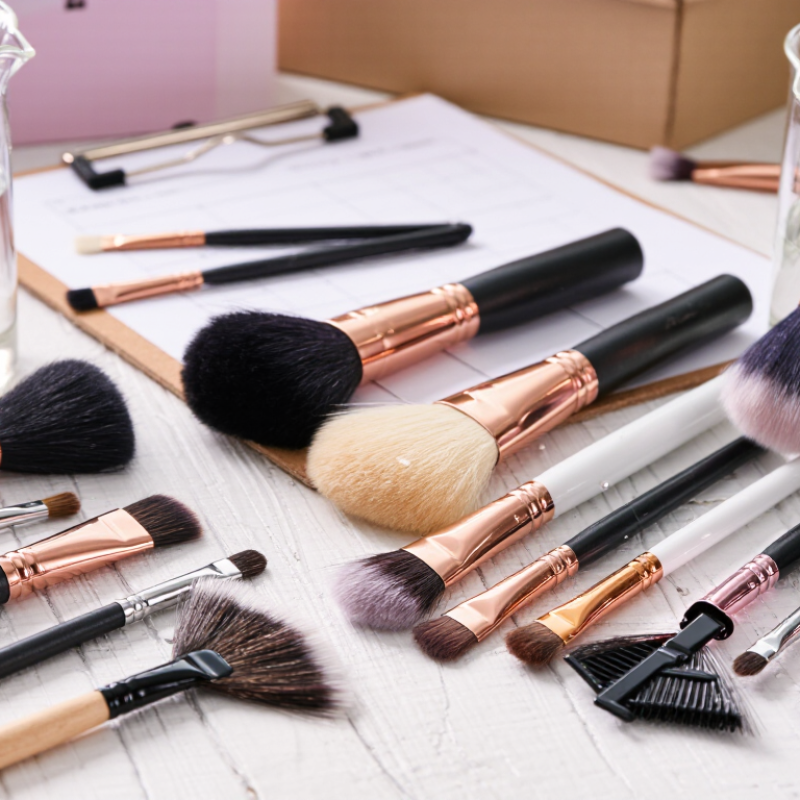
Who Are the Top Makeup Brush Set Manufacturers in China?

How China’s Makeup Brush Manufacturing Industry Is Structured

China’s makeup-brush industry is a network of specialist factories and component suppliers, rather than one uniform production belt. Some manufacturers tuft, shape, trim, and assemble brushes in-house. Others buy finished handles, synthetic filaments, ferrules, or packaging from separate vendors. Small batches matter. So does consistent bristle density.

Domestic demand gives this supply chain a broad market context. The National Bureau of Statistics of China reported cosmetics retail sales of RMB 414.2 billion in 2023. This measures cosmetics sales, not makeup-brush production, so it should not be used as a direct estimate of factory revenue. Trade figures also have limits: UN Comtrade’s HS 960330 category groups cosmetic-application brushes with artists’ and writing brushes. It is a useful reference, but not a clean count of makeup-brush exports.

In practice, production often divides into sampling, material sourcing, brush-head assembly, finishing, and quality inspection. A buyer may approve a prototype, then check shedding, handle balance, and ferrule fit across a larger run. Export-oriented factories may coordinate packaging and shipment, while smaller workshops focus on one production step. The boundaries are not perfectly tidy. Supplier capability can vary even within the same manufacturing area.

How China’s Makeup Brush Manufacturing Industry Is Structured

A typical supply chain, from sourcing components to delivering finished brushes.

The bars count the activities or components listed for each stage: three input components, four production operations, four finishing and quality-control tasks, and two commercial models. These are supply-chain examples, not market shares, factory counts, or company rankings.

What Distinguishes a Leading Makeup Brush Set Manufacturer

A leading makeup brush set manufacturer proves consistency beyond a polished sample. Buyers should examine fiber shedding, ferrule security, handle finish, and brush shape after repeated washing. Ask for documented material specifications, batch records, and inspection results. Small details matter. A loose ferrule can turn a soft blending brush into a customer complaint.

McKinsey’s 2023 beauty-market analysis projected roughly 6 percent annual growth through 2027, reaching about $580 billion. That broader market outlook raises the bar for suppliers: reliable capacity and repeatable quality matter alongside price. A capable factory should explain how it checks incoming fibers, monitors assembly, and handles defects. It should also provide realistic sampling and production timelines. Still, paperwork alone does not guarantee good brushes. A neat sample room can hide uneven production; buyers should compare samples with goods from a trial run.

Tips: Request a small pilot batch. Wash several brushes, check for shedding, and compare their shapes and handles with the approved sample. Ask who performs each inspection, and request dated records rather than verbal assurances.

Who Are the Top Makeup Brush Set Manufacturers in China? — What Distinguishes a Leading Makeup Brush Set Manufacturer

Evaluation Dimension What a Leading Manufacturer Typically Offers What Buyers Should Verify
Product development Support for custom brush shapes, handle designs, ferrules, colors, and set configurations, subject to tooling and order requirements. Request design drawings, material specifications, sample-development steps, and written confirmation of tooling ownership and charges.
Bristle and material options Options may include synthetic filaments and natural hair, along with different handle and ferrule materials. Synthetic bristles are commonly selected for vegan product lines. Confirm the exact fiber type, handle material, ferrule material, and any animal-origin or vegan claims with supporting documentation.
Brush construction Consistent bristle shaping, secure ferrule attachment, smooth handle finishing, and clean assembly across the set. Inspect production samples for shedding, loose ferrules, uneven trimming, rough edges, odor, and finish defects.
Quality control Documented inspection procedures covering incoming materials, in-process production, and finished goods. Ask for the inspection checklist, sampling plan, defect definitions, and recent batch inspection records. Verify any certification directly with its issuer.
Testing and compliance Ability to provide product and material information relevant to the destination market and the buyer’s intended use. Identify the target country and applicable requirements before production. Request relevant test reports and check that they cover the actual product and materials.
Sampling and order terms Clear sample approval, minimum order quantity, production lead-time, payment, and packaging terms. Obtain these terms in writing for the specific design and order. Lead times and minimums vary by customization, materials, and factory capacity.
Packaging and private label Possible packaging choices include pouches, cases, boxes, and buyer-supplied branding, depending on the factory’s capabilities. Approve final artwork, dimensions, materials, labeling, and packaging samples before mass production.
Supply-chain transparency Clear disclosure of the production site and any subcontracted processes relevant to the order. Confirm the legal supplier, manufacturing address, payment beneficiary, and responsibility for subcontracted work.
Communication and documentation Responsive handling of specifications, revisions, sample feedback, production updates, and shipping documents. Assess response quality during sampling and ensure specifications, approvals, and change requests are recorded in writing.

This table presents supplier-evaluation criteria rather than a ranked list of companies. Capabilities, certifications, minimum order quantities, and lead times vary by manufacturer and should be verified for each order.

Notable Makeup Brush Set Manufacturers in China

Notable makeup brush set manufacturers in China often combine brush assembly, handle finishing, and packaging under one roof. This can simplify communication when a buyer needs a coordinated set, such as powder, blush, and eye brushes. Still, a polished catalog is not enough. Check sample bristles for shedding, softness, and shape retention after washing. Inspect the ferrule, the metal sleeve joining bristles to handle. A loose fit may become obvious only after repeated use. Small details matter.

Experienced sourcing teams usually compare several samples before approving a production run. Ask how the maker controls bristle length, handle coating, and set-to-set consistency. Request clear specifications and a sample that matches the intended packaging. Then check whether later samples remain consistent. It takes time. Some factories may be stronger in large-volume orders, while others may handle smaller custom sets more carefully; confirm this directly rather than assuming. I would also review a simple inspection record, though paperwork alone cannot prove every brush will perform well. A few bristles may still escape. That is worth discussing before final approval.

Common Product Ranges, Materials, and Customization Options

Chinese makeup brush set manufacturers commonly offer face, eye, and travel ranges. Face kits may include powder, blush, contour, and foundation brushes; eye sets often pair blending, angled, and detail brushes. A Grand View Research report valued the global makeup tools market at USD 2.6 billion in 2023, reflecting demand across tool categories—not brush sets alone. Feel matters. Buyers should assess bristle shedding, ferrule alignment, and handle balance on actual samples.

Common bristles include synthetic fibers and natural hair, while handles may use wood, aluminum, or molded plastic. Synthetic fibers suit liquid and cream formulas and are generally easier to clean; natural hair can hold powder well but varies in softness and upkeep. No material wins in every use case. Custom options often include brush count, fiber shape, handle color, logo placement, pouch design, and gift packaging. Ask factories for fiber specifications, wash-test results, and sample approval before confirming bulk production.

Tips: Request a matched sample set and test it with the formulas your customers use. Check whether brush heads keep their shape after washing. Small differences in trim or glue can matter, and a polished sample may not represent every production unit—so define inspection criteria in writing.

How to Evaluate Manufacturers for Quality and Export Readiness

Choosing a Chinese makeup brush set manufacturer takes more than comparing sample photos. Handle the brushes and inspect the ferrules, seams, and bristle tips. Gently pull several fibers; repeated shedding deserves investigation. Wash a sample, let it dry, and check whether its shape holds. Note any strong odor or loose adhesive. Small details matter.

Ask for written brush specifications, material descriptions, and the inspection steps used during production. Request samples from more than one production stage when possible. A polished sample is encouraging, but it does not prove every order will match. I would not treat one perfect sample as proof. Agree on acceptable shedding, handle finish, and packaging before placing a larger order, then keep an approved reference sample.

Export readiness shows in practical answers. Can the manufacturer provide accurate carton dimensions, packing lists, lead-time estimates, and clear order records? Ask how it checks quantities and protects brush heads during shipping. Review relevant test reports, but confirm what products and materials they actually cover. A tidy document folder helps; it cannot replace consistent factory checks. Some suppliers may not have every process perfected. Ask how they record defects, correct them, and prevent the same issue from returning.

FAQS

What brushes are commonly included in a makeup brush set?

Face sets may include powder, blush, contour, and foundation brushes. Eye sets often include blending, angled, and detail brushes.

Which bristle materials are commonly available?

Synthetic fibers are generally easier to clean and suit liquid or cream formulas. Natural hair can hold powder well, but softness and upkeep vary. No material suits every use.

How can I check whether brush bristles shed?

Gently pull several fibers and inspect the brush after washing. A few loose bristles may appear, but repeated shedding deserves a closer review.

What should I inspect on a sample brush?

Check the ferrule, handle finish, seams, and bristle tips. Wash the brush, let it dry, and see whether its shape holds. Small details matter.

What customization options may be available?

Options can include brush count, fiber shape, handle color, logo placement, pouch design, and gift packaging. Confirm the details with a matched sample.

Does one approved sample guarantee consistent production?

No. A polished sample cannot prove every unit will match. Keep an approved reference and define acceptable shedding and finish in writing.

What information should I request before ordering?

Ask for written material specifications, inspection steps, carton dimensions, packing lists, and lead-time estimates. Request relevant test reports, then check what they actually cover.

How can I assess packaging and shipping preparation?

Ask how brush heads are protected and how quantities are checked. A tidy document folder helps, but it cannot replace factory checks. I might still ask more questions.

Conclusion

China’s makeup brush industry includes specialized factories, private-label producers, and export-focused suppliers serving buyers with different order sizes and product needs. A leading Makeup Brush Set manufacturer typically combines consistent workmanship with dependable communication, practical production capacity, and the ability to meet agreed specifications. Manufacturers may offer sets for everyday use, professional application, or travel, with options such as synthetic or natural bristles, different handle materials, ferrule finishes, and customized packaging.

When comparing suppliers, buyers should look beyond price. Review sample quality, brush shape and softness, bristle security, finishing, and consistency across a set. Also assess customization capabilities, minimum order quantities, production timelines, quality-control procedures, and experience preparing export shipments. Clear specifications and reliable inspection processes can help ensure that the finished products match expectations and are ready for the intended market.

Ethan

Ethan

Ethan is a professional marketing specialist with a strong understanding of the company’s products, their features, and the needs they are designed to serve. He regularly contributes practical, informative articles to the company website, helping readers understand product capabilities, compare......